2000
Cyberselfish arrived in the year 2000 to warn about an emerging subculture in Silicon Valley.
Well and widely reviewed globally. It did not sell.
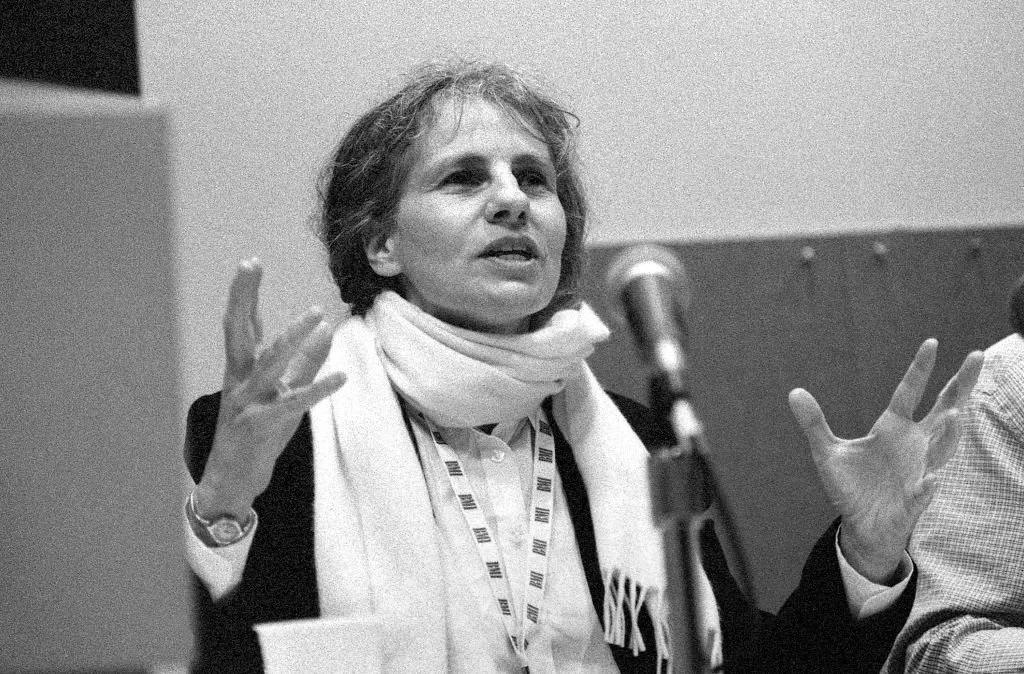
Photo Credit: John Anderson, gettyimages
Explore the original Cyberselfish
website released in the year 2000.
2026
Starting in 2025,people began to realize they should have paid more attention to the book’s observations.
It now seems to have become a minor modern classic.

Photo Credit: Mark Murrmann. Image featuring Cassius the poodle
Read the book, as republished 2026 with an intro by Gil Duran & new afterward by the author.
Book Excerpts
“[I]f you don't understand where you have come from, you can't well understand where you might end up. And I don't believe that a [techno-libertarian] culture that presents itself as being the One True Way of the future, but which in so many ways embodies the worst of the past — where humane values and, ultimately, people, count for less than machines — is one that is cause for rejoicing.”
—————————————————
“If you think about it, PC-based libertarianism can also be reframed as the mind-set of adolescents, with their deep wish for total rampaging autonomy and desire for simple, call-to-arms passionate politics, where Good and Bad are clearly delineated — taking for granted that someone else does the laundry and stocks the refrigerator. Please, mom, I’d rather do it myself: Yet these are the inheritors of the greatest government subsidy of technology and expansion in technical education the planet has ever seen. Remember the Space Race? Like ungrateful adolescent offspring of immigrants who have made it in the new country, technolibertarians take for granted the richness of the environment they have flourished in and resent the hell out of the constraints that bind them. And, like privileged, spoiled teenagers everywhere, they haven’t a clue what their existences would be like without the bounty that has been showered on them. But it’s the teenager way — in fact it’s human nature—to be annoyed with, to want to renounce, those to whom you are indebted. Ask any fifteen-year-old—or any one who has not advanced beyond that age psychologically."
—————————————————
"Realistically, almost no one, not Henry David Thoreau, much less Theodore Kaczynski, has ever really evaded relying on the social mesh to some extent. But in high tech there's a presumption of invulnerability (I don't need anything) and predictability (I will never need anything) that flies smack in the face of the certainty of human loss and suffering and, ultimately, interdependence. And if government is the designated Bad Actor of Last Resort, and traditional religious organizations say they don't have the capacity take up the increasing slack in an era of welfare reform, then who will support the community? And at a time when government spending on social and arts programs is falling away and corporate philanthropy overall is diminishing, what does it signify when high tech's way of being celebrates the exacerbation of these trends? And high tech is supposed to be the way of our future."
—————————————————
About the aUthor
Borsook has worked in and around Northern California tech culture since the early 1980s. Formerly on the masthead of Wired, she has written for multiple tech publications and companies and for countless non-tech publications.
She is currently a contributing editor for the magazine "InFormation/every day computers are making people easier to use", which offers both silly and serious critiques of tech as written by people within it.
She wrote Cyberselfish because she observed and was then moved to document a disturbing Silicon Valley subculture no one outside of tech seemed to be paying much attention to.